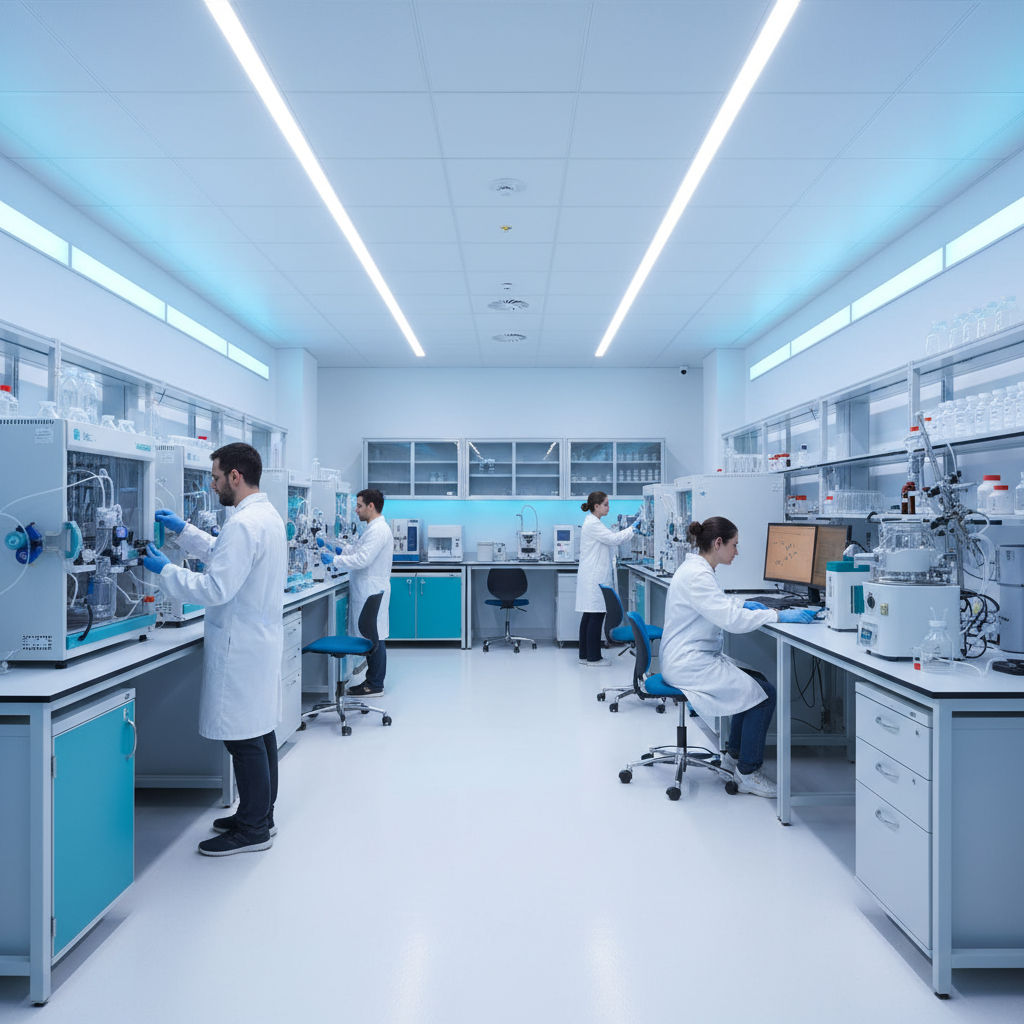
Reconstitution of lyophilized peptides is one of the most fundamental procedures in peptide research, yet it remains a frequent source of experimental error. Improper reconstitution can lead to reduced peptide activity, inconsistent dosing in in-vitro assays, and degraded samples that compromise downstream results. This protocol provides a comprehensive, step-by-step guide to reconstituting lyophilized research peptides for laboratory use.
Why Reconstitution Matters
Lyophilization (freeze-drying) is the standard method for preserving synthetic peptides during storage and shipping. The process removes water from the peptide solution under vacuum, leaving behind a dry powder or "cake" that is significantly more stable than the peptide in solution. However, the transition from lyophilized powder back to a usable solution — reconstitution — introduces several variables that can affect peptide quality.
Studies in peptide chemistry have demonstrated that improper reconstitution accounts for a meaningful fraction of variability in peptide-based research assays. Factors such as solvent choice, reconstitution speed, agitation method, and temperature all influence the final product quality.
Pre-Reconstitution Preparation
Equipment Checklist
Before beginning reconstitution, ensure you have the following items prepared:
- Appropriate solvent (bacteriostatic water, sterile water, acetic acid solution, or DMSO depending on the peptide)
- Insulin syringes (29-31 gauge) or calibrated micropipettes
- Alcohol swabs (70% isopropanol)
- Clean work surface or laminar flow hood
- Peptide vial at room temperature (critical — see below)
- Calculator for concentration calculations
- Lab notebook for documentation
- Gloves (nitrile preferred)
Temperature Equilibration
This step is frequently overlooked but is critically important. Peptide vials stored at -20C or -80C must be allowed to reach room temperature before the seal is broken. Opening a cold vial allows ambient moisture to condense on the lyophilized peptide, which can cause:
- Localized degradation at points of moisture contact
- Clumping that reduces solubility
- Hydrolysis of sensitive peptide bonds
- Inaccurate weighing if the peptide is to be massed
Allow 15-30 minutes for the sealed vial to reach ambient temperature. Do not attempt to accelerate this process with heat.
Solvent Selection Guide
The choice of reconstitution solvent depends on the physicochemical properties of the specific peptide being reconstituted.
Bacteriostatic Water (BAC Water)
Best for: Most standard research peptides
Composition: Sterile water containing 0.9% benzyl alcohol as a preservative
Advantages: Inhibits microbial growth, extending the usable shelf life of reconstituted peptides to 14-28 days when refrigerated
Considerations: The benzyl alcohol preservative may interfere with certain sensitive assays
Sterile Water for Injection
Best for: Single-use preparations, assays sensitive to benzyl alcohol
Composition: Pure water, no preservatives
Advantages: No additives that could interfere with assays
Considerations: Must be used within 24-48 hours and handled with strict aseptic technique due to lack of preservative
Dilute Acetic Acid (0.1%)
Best for: Basic peptides that are poorly soluble in neutral pH water
Composition: 0.1% acetic acid in sterile water (pH approximately 3.0)
Advantages: Protonates basic residues, improving solubility of arginine- and lysine-rich peptides
Considerations: Acidic pH may not be suitable for all downstream applications
DMSO (Dimethyl Sulfoxide)
Best for: Highly hydrophobic peptides that resist aqueous dissolution
Composition: Molecular biology grade DMSO
Advantages: Excellent solvent for hydrophobic sequences
Considerations: Can interfere with certain biological assays; typically used as a co-solvent at 5-10% of final volume
Concentration Calculations
Before adding solvent, calculate the desired concentration and required solvent volume.
Basic Formula
Volume (mL) = Peptide mass (mg) / Desired concentration (mg/mL)
For example, to prepare a 2.5 mg/mL solution from a 5 mg vial:
Volume = 5 mg / 2.5 mg/mL = 2.0 mL of solvent
Peptide Content Adjustment
The labeled mass on a peptide vial represents the gross weight of lyophilized material, which includes the peptide itself plus counter ions (acetate or TFA salts), residual moisture, and trace salts. The actual peptide content is typically 60-85% of the gross weight.
For research requiring precise molar concentrations, the peptide content percentage (available on the COA) should be factored into calculations:
Adjusted mass = Labeled mass x (Peptide content % / 100)
Step-by-Step Reconstitution Protocol
Step 1: Prepare the Workspace
Clean your work surface with 70% isopropanol. If available, perform reconstitution in a laminar flow hood. Put on clean nitrile gloves.
Step 2: Verify Temperature Equilibration
Confirm the vial has reached room temperature. The vial should not feel cold to the touch through gloves.
Step 3: Clean the Vial Stopper
Swab the rubber stopper with a 70% isopropanol alcohol swab. Allow the alcohol to dry completely (approximately 30 seconds). Injecting through a wet stopper can introduce alcohol into the peptide solution.
Step 4: Draw Up Solvent
Using an insulin syringe or sterile syringe, draw up the calculated volume of your chosen solvent. Remove any air bubbles by tapping the syringe barrel and gently depressing the plunger.
Step 5: Add Solvent to Vial
Insert the needle through the rubber stopper at a slight angle. Slowly inject the solvent against the inside wall of the vial — not directly onto the lyophilized peptide cake. Direct injection onto the cake can:
- Blast powder into suspension, causing it to adhere to the vial walls above the solution line
- Create localized high concentrations that may promote aggregation
- Result in loss of material to the vial cap and walls
Step 6: Allow Dissolution
After adding solvent, do NOT shake or vortex the vial. Instead:
- Gently tilt the vial at a 45-degree angle and slowly rotate it
- Roll the vial between your palms for 30-60 seconds
- Let it sit undisturbed for 5-10 minutes
- Inspect the solution — it should be clear and free of visible particles
Most peptides will dissolve within 5-10 minutes using this gentle method. Some larger or more hydrophobic peptides may require up to 30 minutes.
Step 7: Verify Complete Dissolution
Hold the vial up to a light source and inspect for:
- Undissolved particles or flakes
- Cloudiness or turbidity
- Foam or persistent bubbles (indicates protein-like aggregation)
If particles remain after 30 minutes of gentle agitation, consider adding a small volume (10-20% of total) of acetic acid or DMSO as a co-solvent.
Step 8: Document
Record the following in your lab notebook:
- Peptide name, vendor, and batch/lot number
- Solvent used and volume added
- Final concentration
- Date and time of reconstitution
- Visual appearance of the solution
- Storage location
Post-Reconstitution Storage
Refrigerated Storage (2-8C)
- BAC water reconstitutions: Stable for 14-28 days
- Sterile water reconstitutions: Use within 24-48 hours
- Acetic acid reconstitutions: Stable for 7-14 days (peptide-dependent)
Aliquoting for Extended Use
For peptides that will be used over weeks or months, aliquot the reconstituted solution into single-use volumes:
- Use sterile microcentrifuge tubes (pre-chilled)
- Transfer calculated single-use volumes using calibrated pipettes
- Flash-freeze in liquid nitrogen or place directly at -80C
- Thaw one aliquot per use — never refreeze a thawed aliquot
Common Mistakes and Troubleshooting
Mistake: Vigorous Shaking or Vortexing
Problem: Mechanical stress causes peptide denaturation and aggregation. Air-liquid interfaces created by foaming promote surface denaturation.
Solution: Always use gentle swirling or rolling. Never vortex a peptide solution.
Mistake: Using Expired or Contaminated Solvents
Problem: Degraded preservatives in old BAC water or microbial contamination in previously opened solvent vials.
Solution: Check expiration dates. Use fresh solvent vials when possible. Never use solvent from a multi-dose vial that has been open for more than 28 days.
Mistake: Reconstituting at Incorrect Volume
Problem: Too little solvent creates supersaturated solutions prone to precipitation. Too much solvent creates overly dilute solutions that may be below the detection limit of research assays.
Solution: Calculate the desired concentration before reconstitution. When uncertain, err on the side of a more concentrated stock solution that can be diluted.
Mistake: Failing to Record Batch Information
Problem: Without batch-specific documentation, it is impossible to trace experimental variability back to peptide quality differences.
Solution: Always record the vendor, batch/lot number, reconstitution date, solvent, and concentration.
Quality Verification After Reconstitution
For research requiring the highest confidence in peptide quality, consider these post-reconstitution checks:
- Visual inspection: Solution should be clear and colorless (unless the peptide has intrinsic color, such as GHK-Cu which is blue-green)
- pH measurement: Should be consistent with the expected pH for the chosen solvent
- Activity assay: If a functional assay is available, test the reconstituted peptide at a known active concentration before committing it to experiments
Conclusion
Proper reconstitution is a foundational laboratory skill that directly impacts research reproducibility. By following a systematic protocol — from temperature equilibration through documentation — researchers can minimize variability and ensure that their peptide solutions accurately represent the quality of the lyophilized starting material. Standardizing your reconstitution protocol across your laboratory is one of the simplest ways to improve the consistency of peptide-based research.
This protocol is provided for research purposes only. All peptides discussed are for laboratory research use only and are not intended for human consumption.