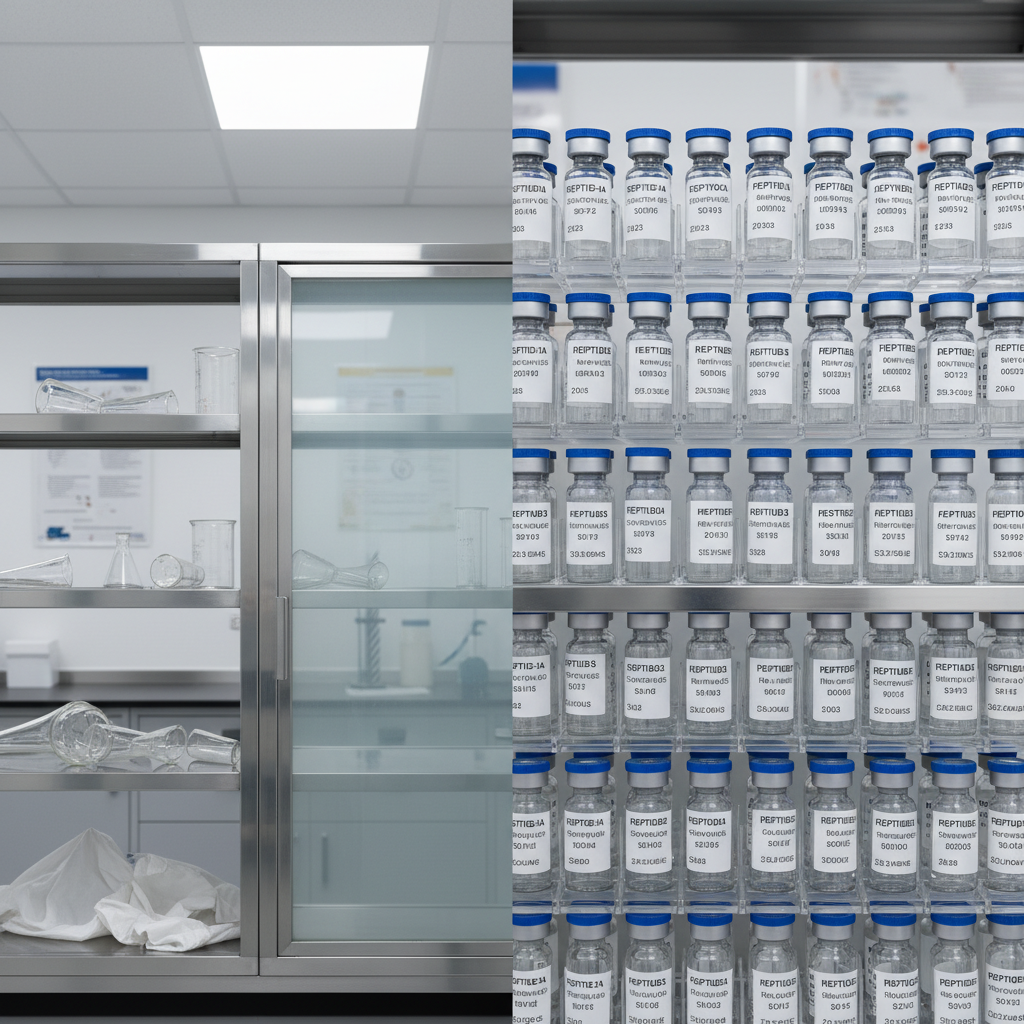
Peptide Sciences, long considered one of the gold standards in the research peptide industry, ceased operations in late 2025. The closure sent shockwaves through the research community, as many researchers had relied on the vendor for years as their primary source of verified, high-purity research peptides. In this article, we analyze why the closure happened, what it means for the industry, and which vendors are best positioned to fill the gap.
What Happened to Peptide Sciences?
Peptide Sciences operated for over a decade as one of the most respected names in the research peptide market. They were known for:
- Consistently high purity (typically 98-99%+)
- Comprehensive third-party COAs on every product
- A wide catalog of research peptides
- Professional packaging and handling
- Responsive customer support
The exact reasons for the closure have not been fully disclosed, but industry observers point to several contributing factors:
- Increased regulatory scrutiny of the research peptide market
- Rising compliance costs associated with quality testing and documentation
- Market fragmentation from new competitors entering with lower prices
- Supply chain disruptions affecting raw material sourcing
- Legal landscape changes creating uncertainty for US-based peptide suppliers
What This Means for Researchers
The loss of Peptide Sciences represents more than just one fewer vendor option. It signals broader market shifts that researchers should be aware of:
- Quality benchmarks matter: Peptide Sciences set a quality standard that other vendors were measured against. Without this benchmark, researchers must be more diligent in their own quality evaluation.
- Vendor diversification is essential: Relying on a single vendor, no matter how reputable, creates supply risk. Maintaining relationships with 2-3 qualified vendors is prudent.
- The market is consolidating: Larger vendors are absorbing displaced customers, while smaller vendors are stepping up their quality standards to compete.
Best Alternatives in 2026
Based on our comprehensive vendor analysis, here are the top alternatives for researchers who previously relied on Peptide Sciences:
1. Ascension Peptides (Score: 9.6/10)
Ascension Peptides is our top-ranked vendor and the closest analog to what Peptide Sciences offered. Their commitment to third-party COA verification on every batch, consistently high purity ratings, and comprehensive product catalog make them the most natural replacement.
Why they're a strong alternative:
- Third-party COA on every single batch — the same standard Peptide Sciences maintained
- 99%+ purity across their product catalog
- 65+ products covering all major categories
- Fast domestic shipping with temperature control
- Multiple payment methods including cryptocurrency
Price range: $25-$85 per vial
2. Swiss Chems (Score: 9.2/10)
Swiss Chems offers the broadest product catalog in the market with 90+ products, making them ideal for researchers who need variety alongside quality. Their third-party testing on peptide products provides the quality assurance that displaced Peptide Sciences customers require.
Why they're a strong alternative:
- Largest product selection in the market
- Established reputation with years of operation
- Competitive pricing with regular promotions
- Third-party COA on all peptide products
Price range: $20-$120 per vial
3. Limitless Biotech (Score: 9.0/10)
Limitless Biotech particularly excels in COA documentation quality, publishing full chromatographic data that will satisfy researchers accustomed to Peptide Sciences' thorough documentation. Their in-house QC team adds an extra verification layer.
Why they're a strong alternative:
- Exceptional COA documentation with full chromatographic data
- In-house QC team plus third-party verification
- Detailed product pages with molecular data and research citations
- Well-organized catalog by research application
Price range: $28-$95 per vial
4. Core Peptides (Score: 8.8/10)
Core Peptides takes a focused approach similar to Peptide Sciences' early days — a curated catalog with unwavering quality standards. Their smaller selection means more attention to each product's quality consistency.
Why they're a strong alternative:
- Quality-first approach with focused product selection
- Third-party HPLC COA on every product
- Fast domestic shipping
- Competitive pricing for verified quality
Price range: $30-$90 per vial
5. Sports Technology Labs (Score: 8.7/10)
STL has built a strong community reputation through years of consistent quality. Their peptide catalog is still growing but covers the essential compounds most researchers need.
Why they're a strong alternative:
- Strong community reputation with extensive feedback
- Educational content and research resources
- Consistent quality across orders
- Good for researchers who also work with SARMs
Price range: $30-$100 per vial
Transition Tips
If you're switching from Peptide Sciences to a new vendor, consider these tips:
- Start with a small test order: Before committing your research budget, order a single product you have experience with and verify the quality matches your expectations.
- Compare COAs carefully: Review the new vendor's COA format and data against what you were accustomed to from Peptide Sciences.
- Test purity independently if possible: If you have access to HPLC equipment, run a comparison test on your first order.
- Check product formatting: Different vendors may use different counter ions (acetate vs. TFA), lyophilization methods, or vial sizes that could affect your reconstitution protocols.
- Note any differences in product naming: The same peptide may be listed under slightly different names or with different modifications across vendors.
Looking Forward
The closure of Peptide Sciences, while disruptive, has prompted positive changes in the market. Remaining vendors are investing more heavily in quality assurance and transparency to capture displaced customers. The overall quality standard in the market may actually improve as vendors compete on verified purity rather than marketing claims alone.
For researchers, this is an opportunity to establish relationships with vendors who prioritize the same quality standards that made Peptide Sciences a trusted name. The vendors listed above have all demonstrated a commitment to third-party testing, transparent COA documentation, and consistent product quality.
This article is for informational purposes about the research peptide vendor market. All peptides discussed are for laboratory research use only and are not intended for human consumption.